
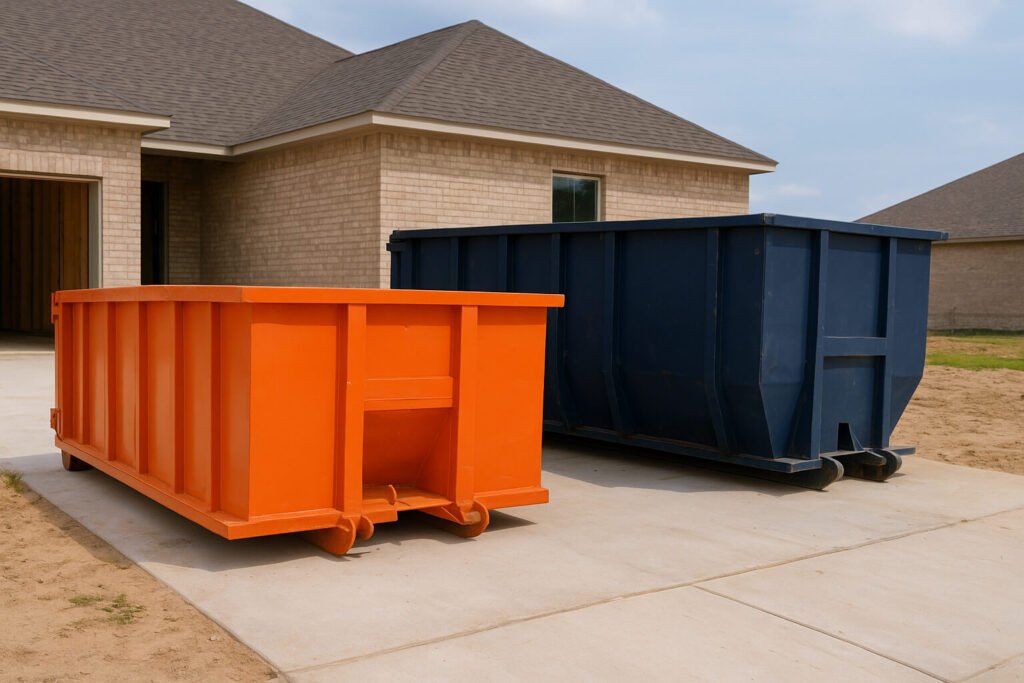
What Size Do I Need? 15 vs 20 Yard Explained
Choosing the right dumpster size prevents extra trips, overage fees, and project delays. This guide compares the three most-requested options— 15 yard roll off dumpster, and 20 yard roll off dumpster—so you can match capacity, weight limits, and footprint to your cleanup.
Quick Snapshot: Capacity, Footprint, and Typical Uses
| Size | Approx. Capacity | Typical Footprint* | Best For |
| 15 yard roll off dumpster | ~4–5 pickup loads | ~14 ft L × 7 ft W × 4 ft H | Multi-room junk, medium interior work, small demo |
| 20 yard roll off dumpster | ~6–7 pickup loads | ~14 ft L × 7 ft W × 6 ft H | Larger cleanouts, multi-room remodels, bulky items |
How To Choose Your Size (A Simple 5-Factor Method)
- Debris Type
Light, fluffy materials (cardboard, trim, drywall offcuts) fill volume fast but weigh less. Dense debris (tile, masonry, dirt) hits weight limits early. Choose based on the heaviest 30–40% of what you’ll load.
- Loading Access & Driveway Space
Short or curved drives, alleys, low trees, gates, or tight HOA setbacks can make a 20-yard placement tricky.
- Timeline & Swap Strategy
Choose a size that will hold your full expected volume for the duration of the project. We do not offer mid-project swaps or extra hauls. If you anticipate more than one container’s worth, either step up to a larger size or plan a second rental after the first container is removed.
15 Yard: The “Just Right” Middle Ground
Best when:
- You’re tackling multi-room decluttering or moderate interior updates.
- You have mixed debris: cabinetry, flooring, doors, drywall, and fixtures.
Pros
- Excellent for staggered cleanouts (inside → garage → yard).
Watchouts
- For bulky items (sofas, wardrobes, multiple large vanities), volume can fill sooner than expected.
20 Yard: The Workhorse for Bigger Cleanouts
Best when:
- You’re doing multi-room renovations, major decluttering, or handling larger furniture.
- You expect 6–7 pickup loads or more.
- You want extra headroom to avoid packing puzzles.
Pros
- Highest versatility per dollar for bigger residential jobs.
- Better for bulky items and longer projects.
- Reduces risk of ordering a second haul.
Watchouts
- Easy to exceed weight if you add dense materials late—plan loads up front.
Weight Limits: Hidden Driver of Cost
Overage charges come from exceeding included tonnage—often not from “too much volume.” Use these guidelines:
- Light Loads (household junk, packaging): Volume fills first; 15 is usually fine.
- Mixed Remodeling (cabinets, drywall, flooring): 15 or 20 helps balance volume vs. weight.
- Dense Debris (soil, stone, tile, masonry): Call before loading. Even a 15 can max tonnage quickly. You may need a dedicated plan or split loads.
Tip: Stage heavy materials first. If you see the base layering get dense, consider stopping and calling for guidance before you exceed limits.
Space & Placement Checklist (Avoid Delivery Day Surprises)
- Measure length + width of the intended spot and add buffer (2–3 feet).
- Overhead clearance: low branches, carports, power lines, balcony overhangs.
- Ground conditions: level, firm surface beats soft soil or fresh asphalt.
- Load path: clear walking space from work area to bin to prevent bottlenecks.
- HOA & neighbors: verify allowable placement duration and hours.
If any item on this list is a concern, the 15 yard roll off dumpster often balances fit and capacity.
Loading Strategy: Max Capacity, Min Headaches
- Place heavy/flat debris first (flooring, drywall, lumber) to create a stable base.
- Break down bulky items (furniture, cabinets) to reduce voids.
- Layer and stack—alternate flat layers with odd-shaped items to fill gaps.
- Keep below the rim—required for safe transport and to avoid trip delays.
- Separate dense materials and confirm allowances before loading.
This approach applies across all sizes, but it’s especially valuable for the 20 yard roll off dumpster, where stacking discipline yields the biggest gains.
Cost Control: How to Avoid Overages
- Pick the right size once. If your estimate straddles 15, choose the 15 yard roll off dumpster. If it straddles 20, step up to the 20 yard roll off dumpster.
- Schedule one swap instead of two under-sized bins arriving days apart.
- Pre-sort restricted items (paint, batteries, chemicals) to avoid contamination fees.
- Confirm timing so the bin arrives just before heavy demo or cleanout—less time on site, less temptation to “keep adding stuff.”
- Ask for a clear, flat-rate quote with included tonnage and daily extension rate.
Which Size Fits These Common Scenarios?
- Whole-home declutter with bulky furniture: 20 yard roll off dumpster
- Multi-room interior updates with mixed debris: 15 yard roll off dumpster (step up to 20 if furniture is included)
- Event or community cleanup with bagged waste: 15 yard roll off dumpster
- Yard overhaul (branches, shrubs, light hardscape): 15 yard roll off dumpster (20 if you expect many large limbs)
FAQs
Is a 20 yard always the safest pick?
Not if your driveway is short or your debris is very dense. Choose the smallest bin that fits your access and weight profile; stepping up makes sense when volume (not weight) is your risk.
What if I finish early?
Call for early pickup—no need to keep a container on site once you’re done.
How does this relate to broader options?
If you’re comparing providers for roll off dumpster rental in texas, ask about exact dimensions, included tonnage.
Bottom Line
- Choose 15 for most medium projects and mixed debris.
- Choose 20 for larger cleanouts, bulky items, or when you want margin to avoid a second haul.
Still unsure? Give a brief rundown of your debris and timeline. We’ll recommend the right size—saving you time, money, and stress—so your project runs cleanly from delivery to pickup.